
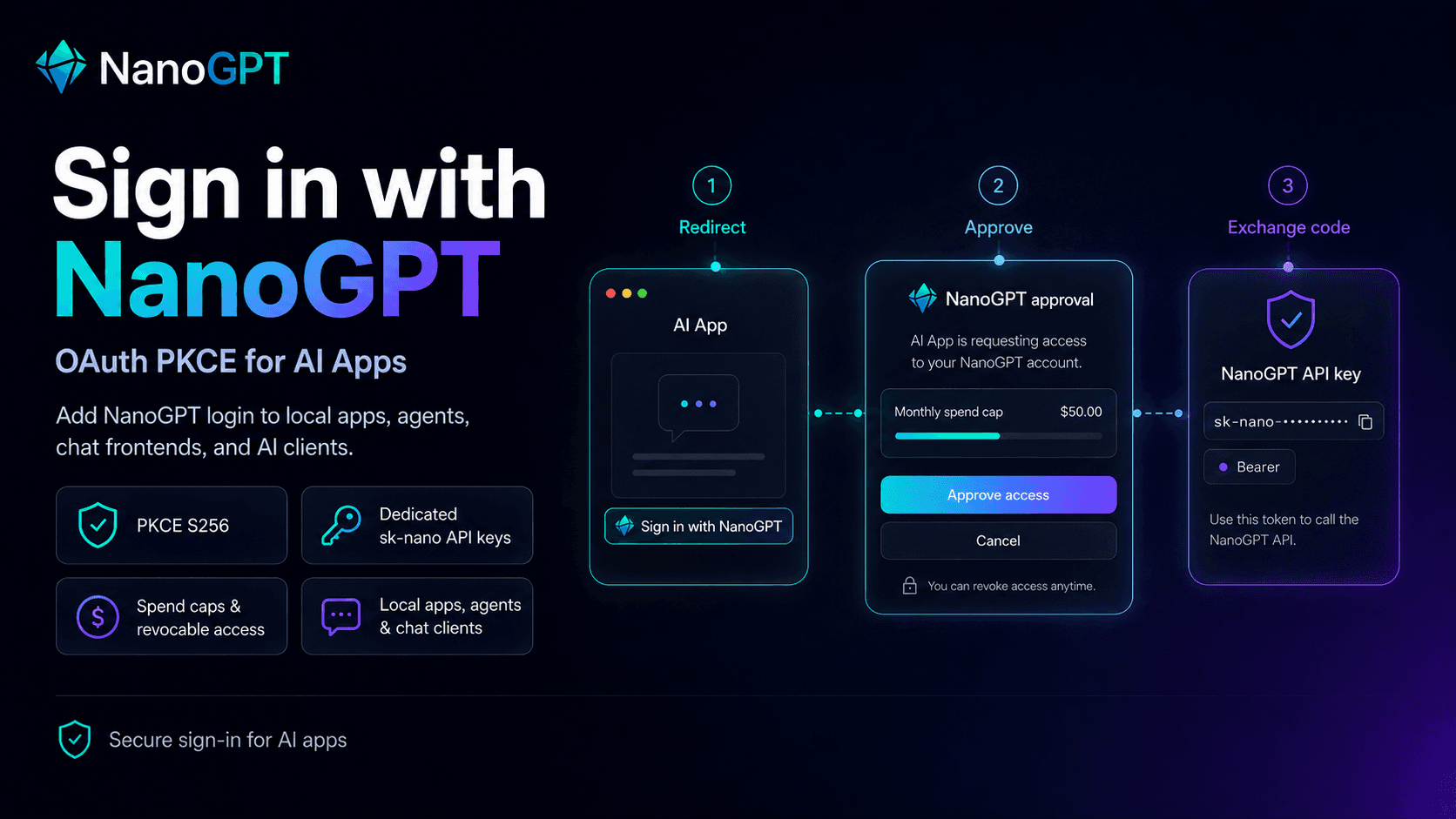
Sign in with NanoGPT: OAuth PKCE for AI Apps
Developers can now add Sign in with NanoGPT to local apps, agents, chat frontends, and OpenAI-compatible clients.
Updates, guides, and insights
Showing
156 posts found for 'api'
Developers can now add Sign in with NanoGPT to local apps, agents, chat frontends, and OpenAI-compatible clients.
NanoGPT and OpenRouter both offer one API for hundreds of AI models at provider list prices. The difference is what happens to your money: OpenRouter takes ~5.5% when you buy credits, NanoGPT credits deposits in full. A detailed comparison.
NanoGPT Private Mode encrypts supported TEE chat requests in your browser or local proxy before NanoGPT receives them, with receipts you can verify yourself.
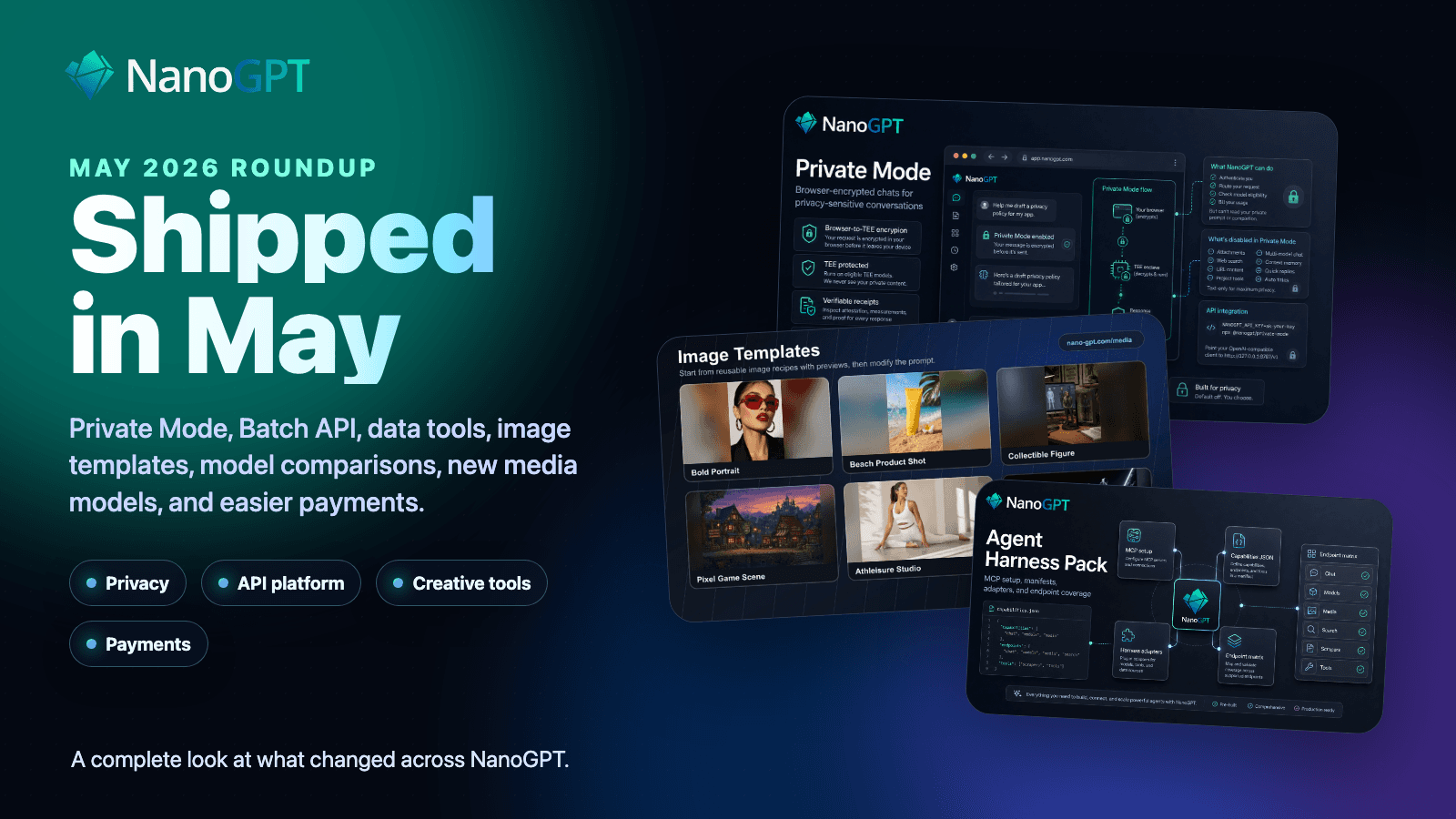
A complete roundup of what NanoGPT shipped in May 2026, including Private Mode, PII redaction, Batch API, Data API, image templates, model comparisons, new media models, payment options, and reliability improvements.
NanoGPT Private Mode encrypts supported TEE model requests in the browser, shows verification receipts after responses, and gives users a way to independently check attestation evidence.
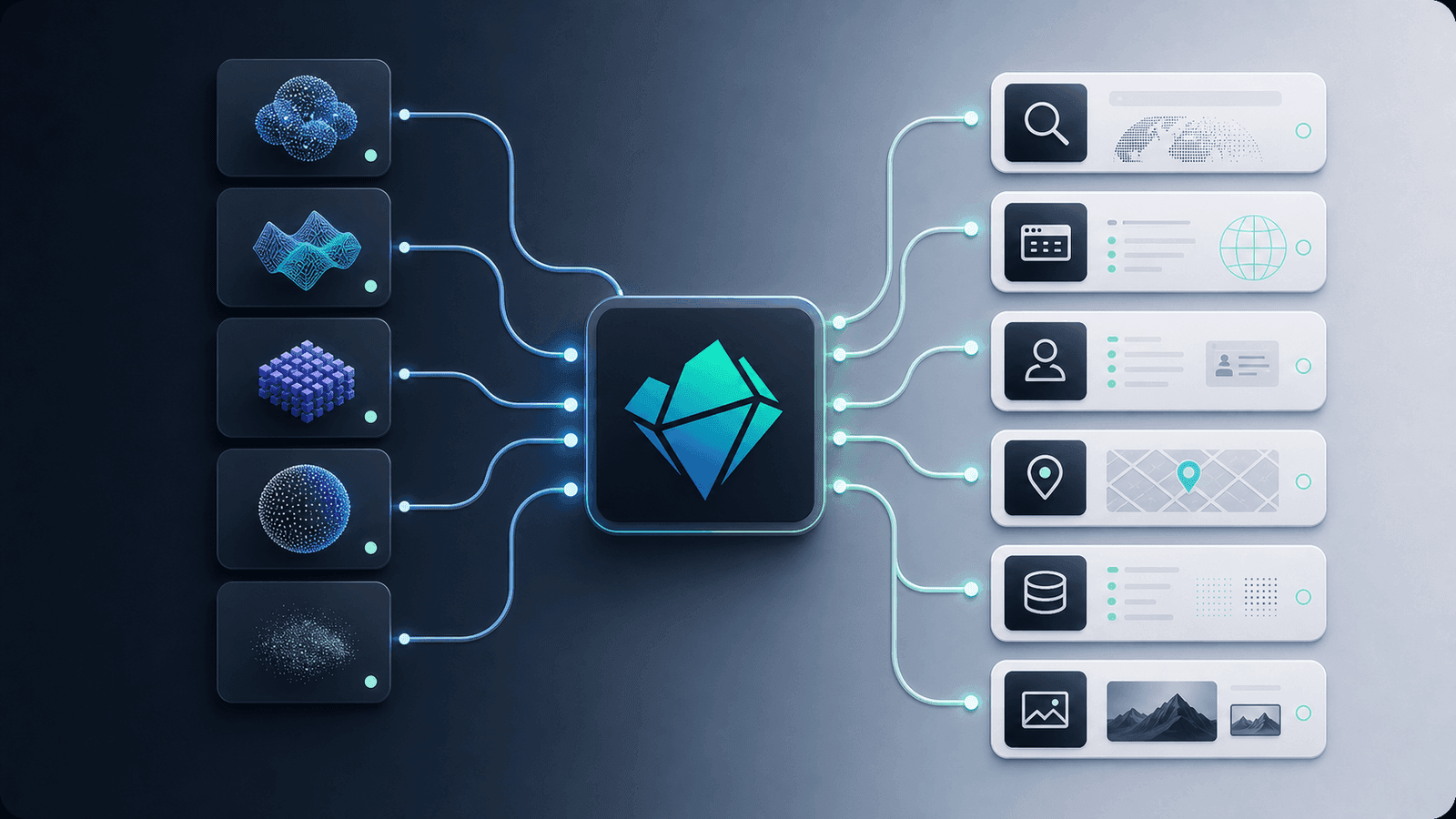
A practical guide to combining NanoGPT models with web search, memory, MCP, scrapers, and application tools for useful AI automations.
Step-by-step guide to connect Risuai to NanoGPT, choose models, and configure pay-as-you-go or subscription mode.
Looking for an AI subscription alternative in 2026? Learn how to use 400+ AI models for chat, image, and video in one place without juggling multiple paid plans.
Compare every way to access Claude models — Claude Pro, API direct, and NanoGPT. See real costs per conversation and find the cheapest option for your usage level.
A detailed comparison of NanoGPT and ChatGPT Plus. See how pay-per-use pricing compares to a $20/month subscription, which models you get access to, and when each option makes more sense.