

NanoGPT Blog
Updates, guides, and insights
Showing
168 posts found for 'models'

OpenRouter Alternatives (2026) | Compared by use case

Claude Opus 5: What Anthropic's Benchmarks Show
Anthropic reports gains for Claude Opus 5 in coding, computer use, knowledge work, and scientific research. See what the launch results suggest, their limits, and when Opus 5 is worth testing.
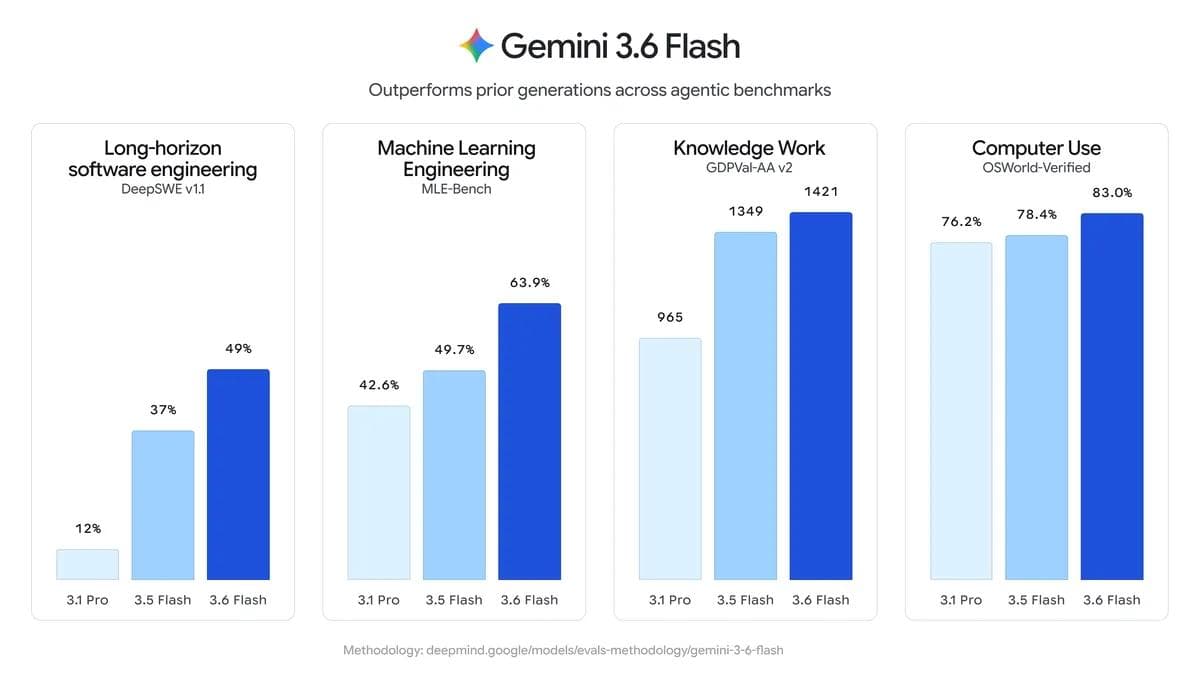
Gemini 3.6 Flash vs Gemini 3.5 Flash Lite: Which Should You Use?
Compare Gemini 3.6 Flash and Gemini 3.5 Flash Lite on benchmarks, speed, pricing, context, coding, research, and high-volume work.

Shipped in June: Private Mode, OAuth, GLM 5.2, Media Tools, and More
A complete roundup of what NanoGPT shipped in June 2026, including Private Mode improvements, Sign in with NanoGPT, Batch API expansion, new models, media tools, payment updates, privacy controls, and community projects.

The open-weight models worth trying on NanoGPT right now
DeepSeek V4 Flash, GLM 5.2, MiniMax M3, and Nemotron 3 Ultra show why open-weight models now deserve first-round testing for coding, long-context work, agents, and enterprise workflows on NanoGPT.
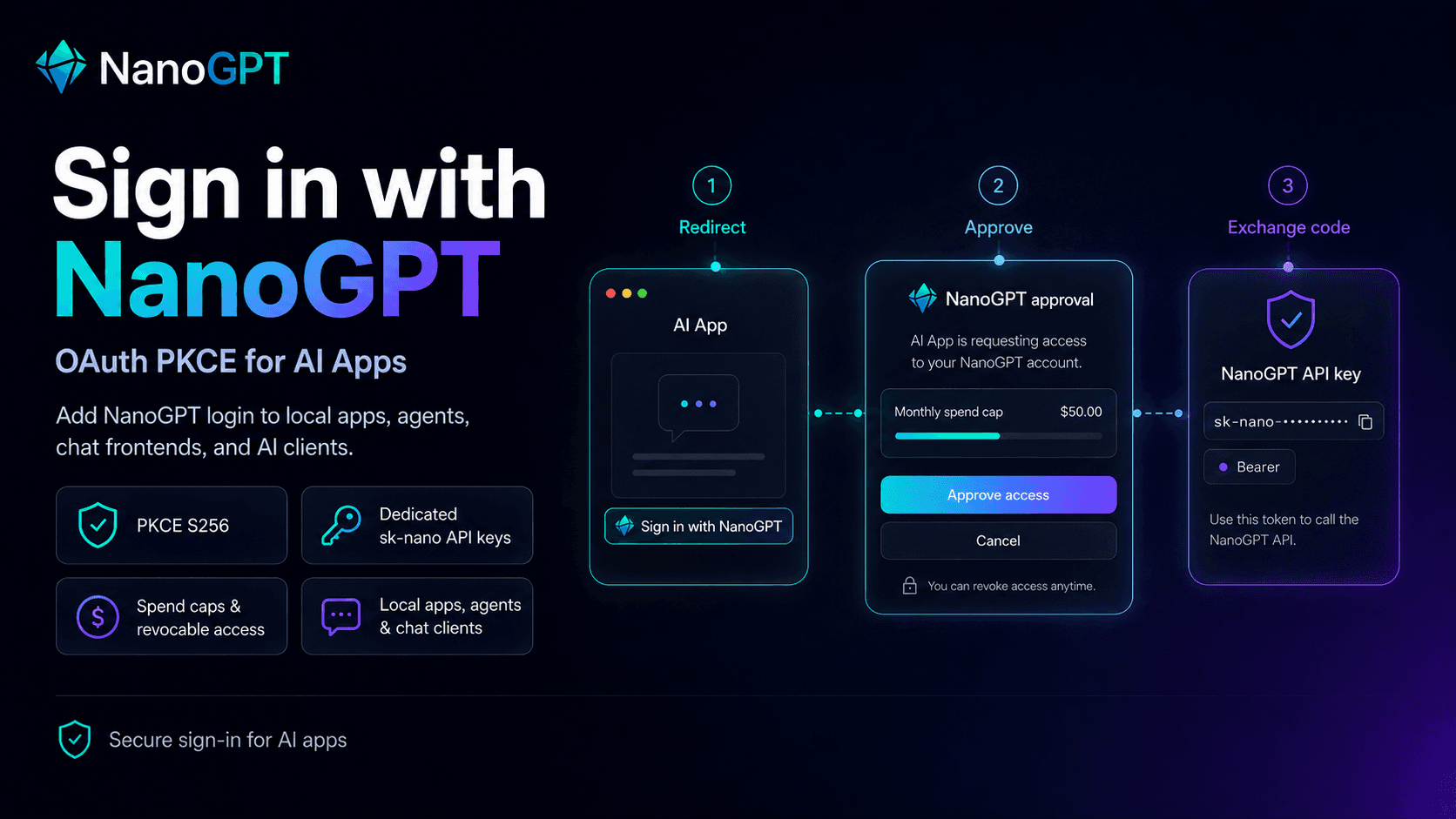
Sign in with NanoGPT: OAuth PKCE for AI Apps
Developers can now add Sign in with NanoGPT to local apps, agents, chat frontends, and OpenAI-compatible clients.
NanoGPT vs OpenRouter: Same Models, No Deposit Fee
NanoGPT and OpenRouter both offer one API for hundreds of AI models at provider list prices. The difference is what happens to your money: OpenRouter takes ~5.5% when you buy credits, NanoGPT credits deposits in full. A detailed comparison.

Browser-Encrypted Private Mode on NanoGPT
NanoGPT Private Mode encrypts supported TEE chat requests in your browser or local proxy before NanoGPT receives them, with receipts you can verify yourself.

Shipped in May: Private Mode, Batch API, Data Tools, and More
A complete roundup of what NanoGPT shipped in May 2026, including Private Mode, PII redaction, Batch API, Data API, image templates, model comparisons, new media models, payment options, and reliability improvements.