

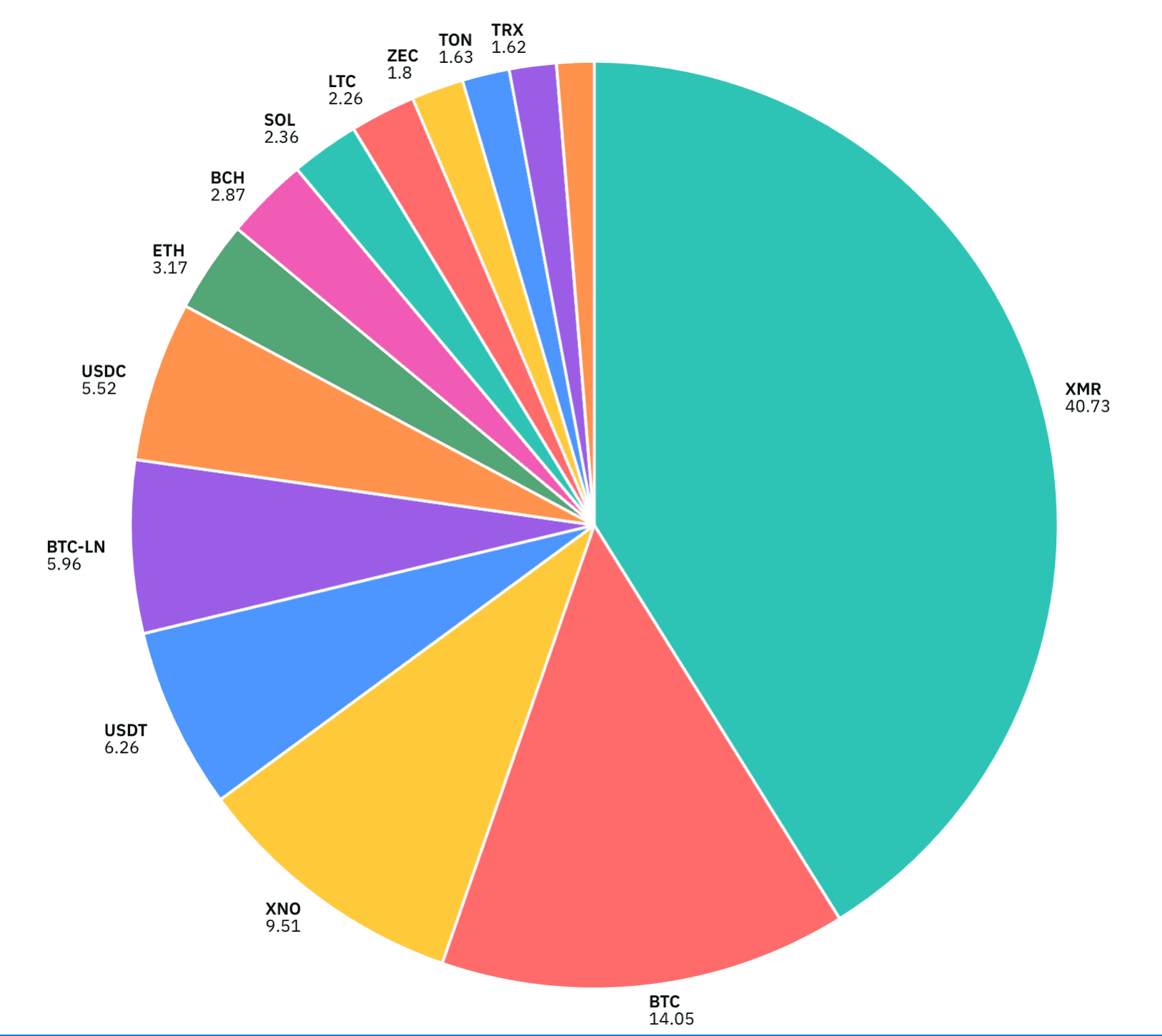
2026 Mid-Year Crypto Payment Statistics: Monero Still Leads, Bitcoin Rails Grow, Stablecoins Broaden
NanoGPT's first-half 2026 crypto payment data across XMR, XNO, BTC, Lightning, USDC, USDT, LTC, ZEC, ETH, SOL, TON, and more.
Updates, guides, and insights
Showing
NanoGPT's first-half 2026 crypto payment data across XMR, XNO, BTC, Lightning, USDC, USDT, LTC, ZEC, ETH, SOL, TON, and more.
June 2026 NanoGPT crypto deposit data, with Monero at 40.73%, Bitcoin second, Nano third, and stablecoins at 11.78% combined.
A complete roundup of what NanoGPT shipped in June 2026, including Private Mode improvements, Sign in with NanoGPT, Batch API expansion, new models, media tools, payment updates, privacy controls, and community projects.

DeepSeek V4 Flash, GLM 5.2, MiniMax M3, and Nemotron 3 Ultra show why open-weight models now deserve first-round testing for coding, long-context work, agents, and enterprise workflows on NanoGPT.
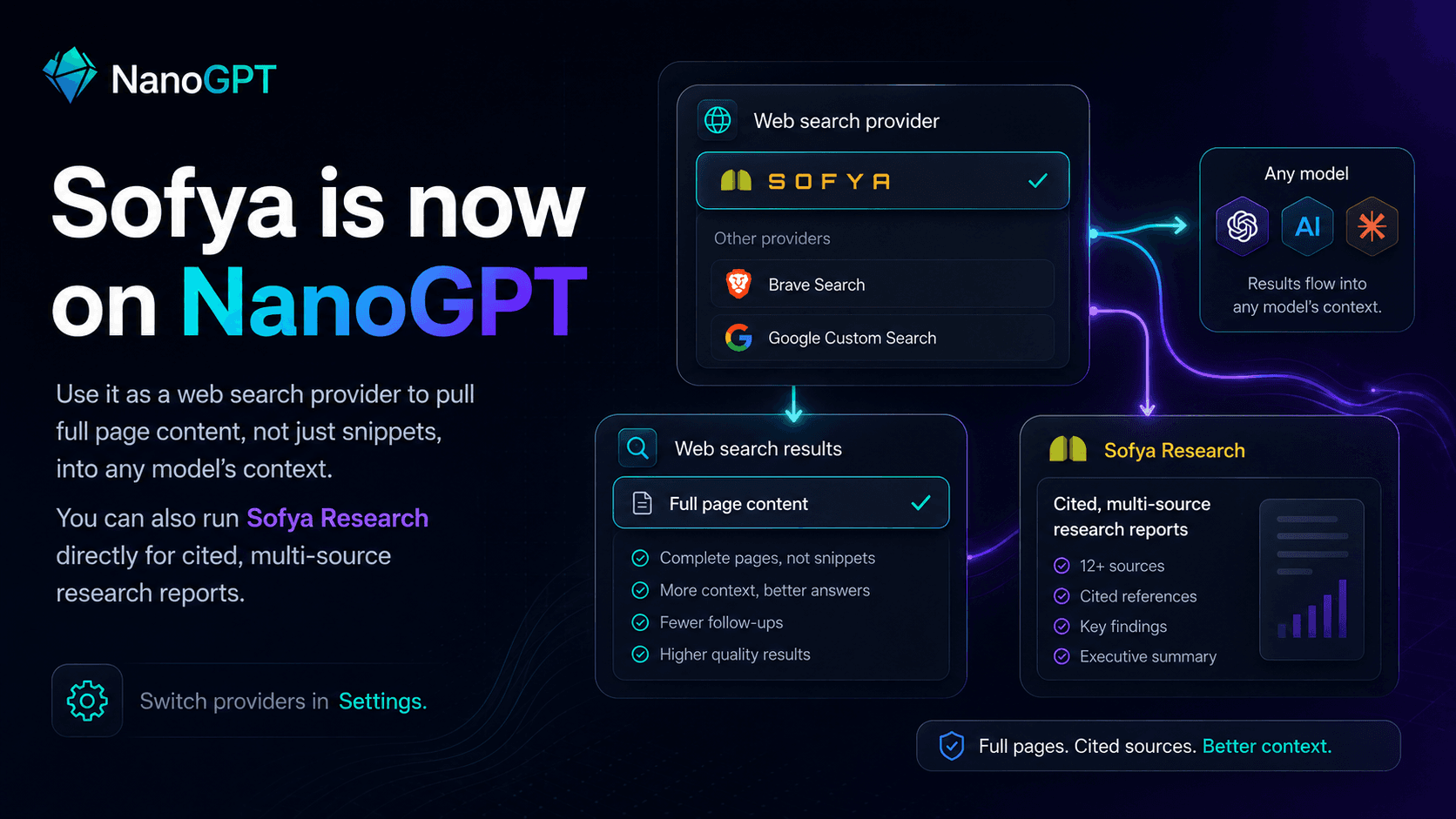
Sofya is now available on NanoGPT as a web search provider and as the Sofya Research model, bringing page-content search, URL fetching, AI extraction, and multi-source research into one workflow.
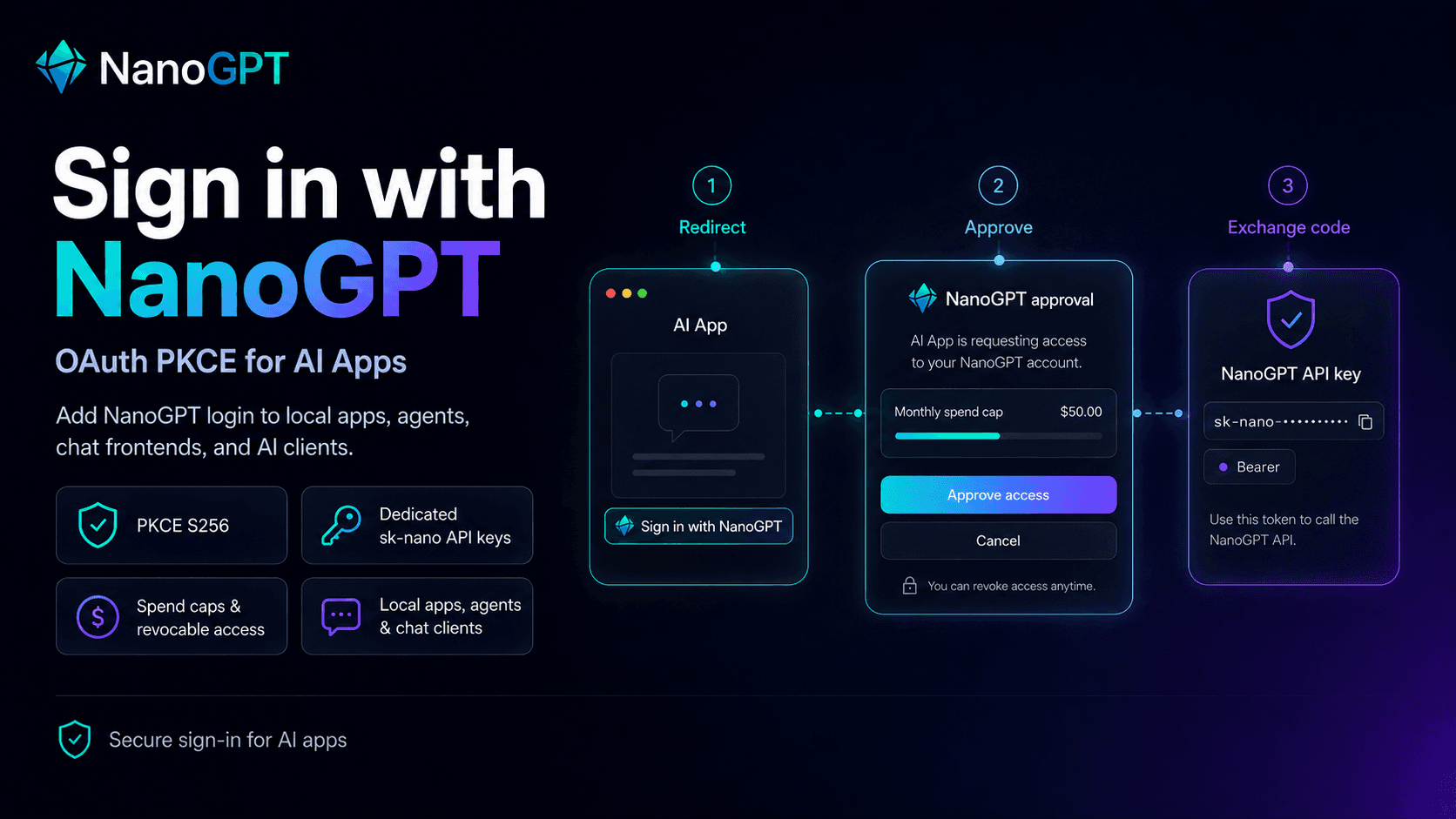
Developers can now add Sign in with NanoGPT to local apps, agents, chat frontends, and OpenAI-compatible clients.

NanoGPT and OpenRouter both offer one API for hundreds of AI models at provider list prices. The difference is what happens to your money: OpenRouter takes ~5.5% when you buy credits, NanoGPT credits deposits in full. A detailed comparison.

NanoGPT Private Mode encrypts supported TEE chat requests in your browser or local proxy before NanoGPT receives them, with receipts you can verify yourself.

A complete roundup of what NanoGPT shipped in May 2026, including Private Mode, PII redaction, Batch API, Data API, image templates, model comparisons, new media models, payment options, and reliability improvements.
NanoGPT Private Mode encrypts supported TEE model requests in the browser, shows verification receipts after responses, and gives users a way to independently check attestation evidence.